Anti-roll bar:role, setup and influence on a sports car's understeer and oversteer
- 11 min read
An anti-roll bar does more than stiffen: it splits roll stiffness between front and rear and shifts the car's balance.
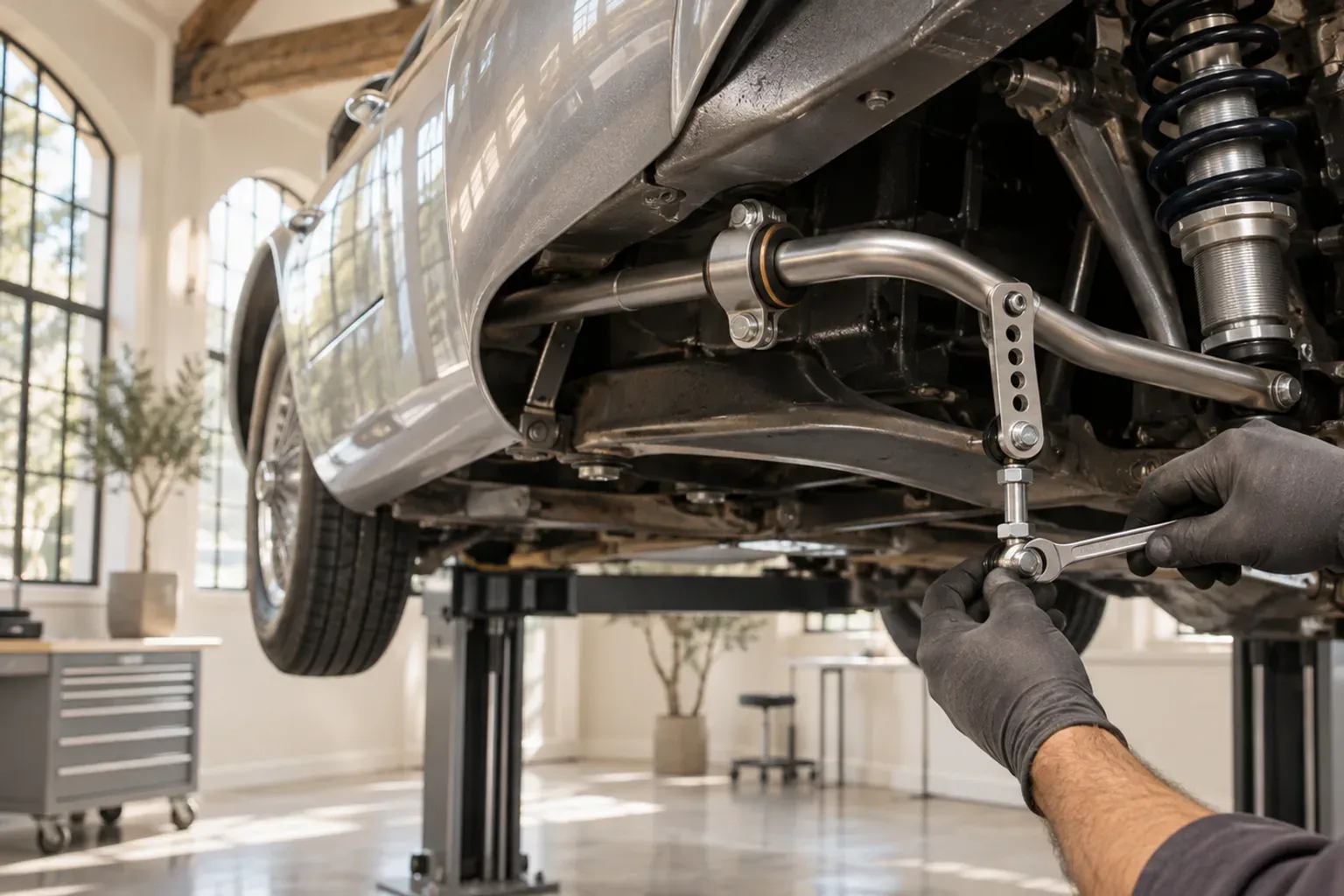
An anti-roll bar is a torsion bar linking left and right wheels of one axle; it only works in roll. Its real job is balance: the stiffer axle takes more load transfer. A stiffer front tends to understeer, a stiffer rear helps rotation but can hurt traction. Set it together with springs, dampers and alignment, step by step.
What does an anti-roll bar do?
A discreet part that shapes how the car turns in, takes a set and exits.
The principle: a torsion bar linking left and right wheels of one axle
A U-shaped bar mounted on the body, linked to each wheel by a drop link.
When both wheels move together, it does nothing; when one compresses more, it twists and resists.
It adds stiffness in roll only.
Roll, load transfer and cornering grip
The bar does not remove total load transfer; it limits roll.
It decides how transfer is split front to rear, and the more loaded axle loses relative grip.
Springs and dampers are covered in our article on coilovers.
Front or rear bar: how they steer the car's behaviour
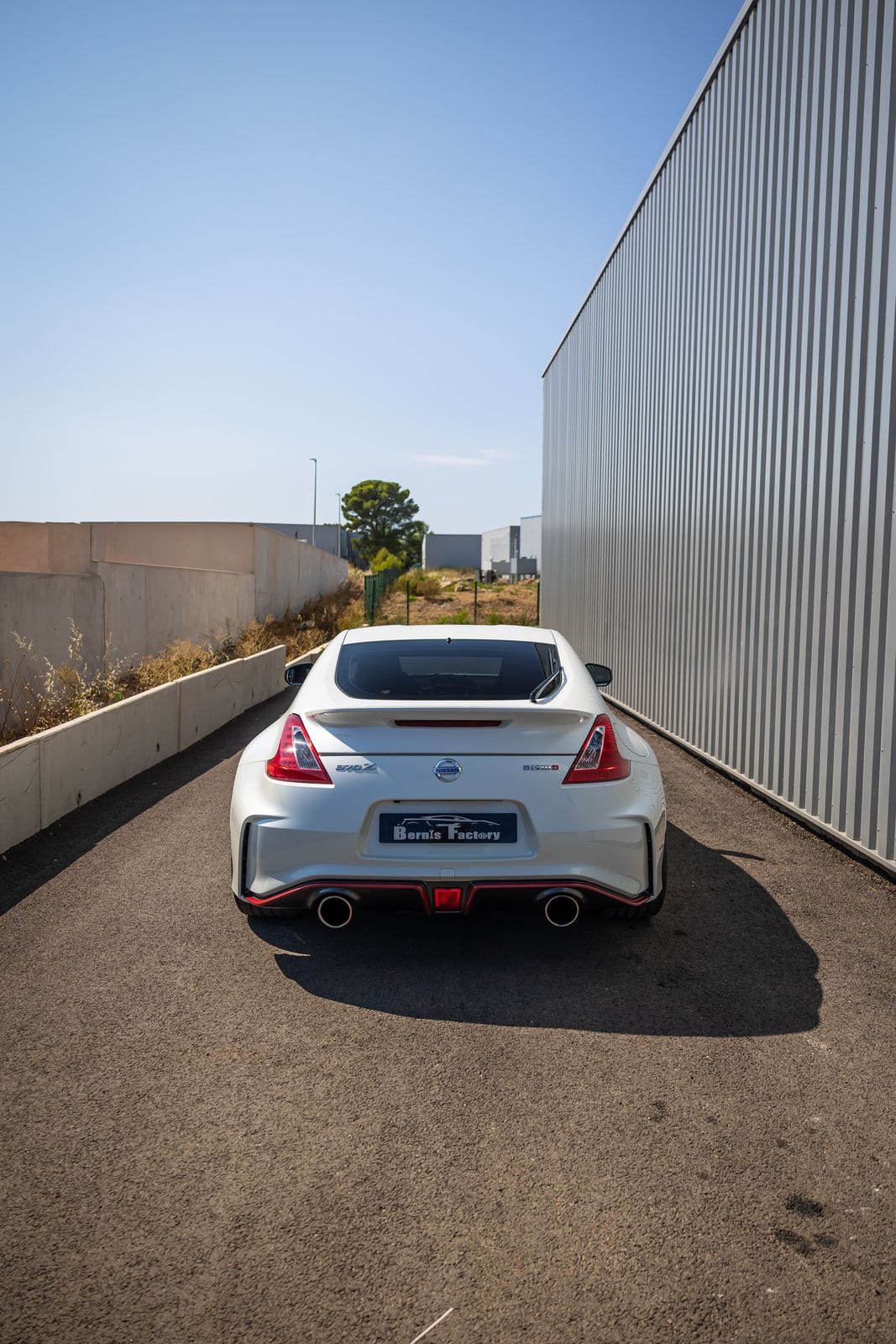
Changing bar stiffness chooses which axle reaches its limit first.
Stiffer front: towards understeer
The front tyres saturate first and the car runs wide.
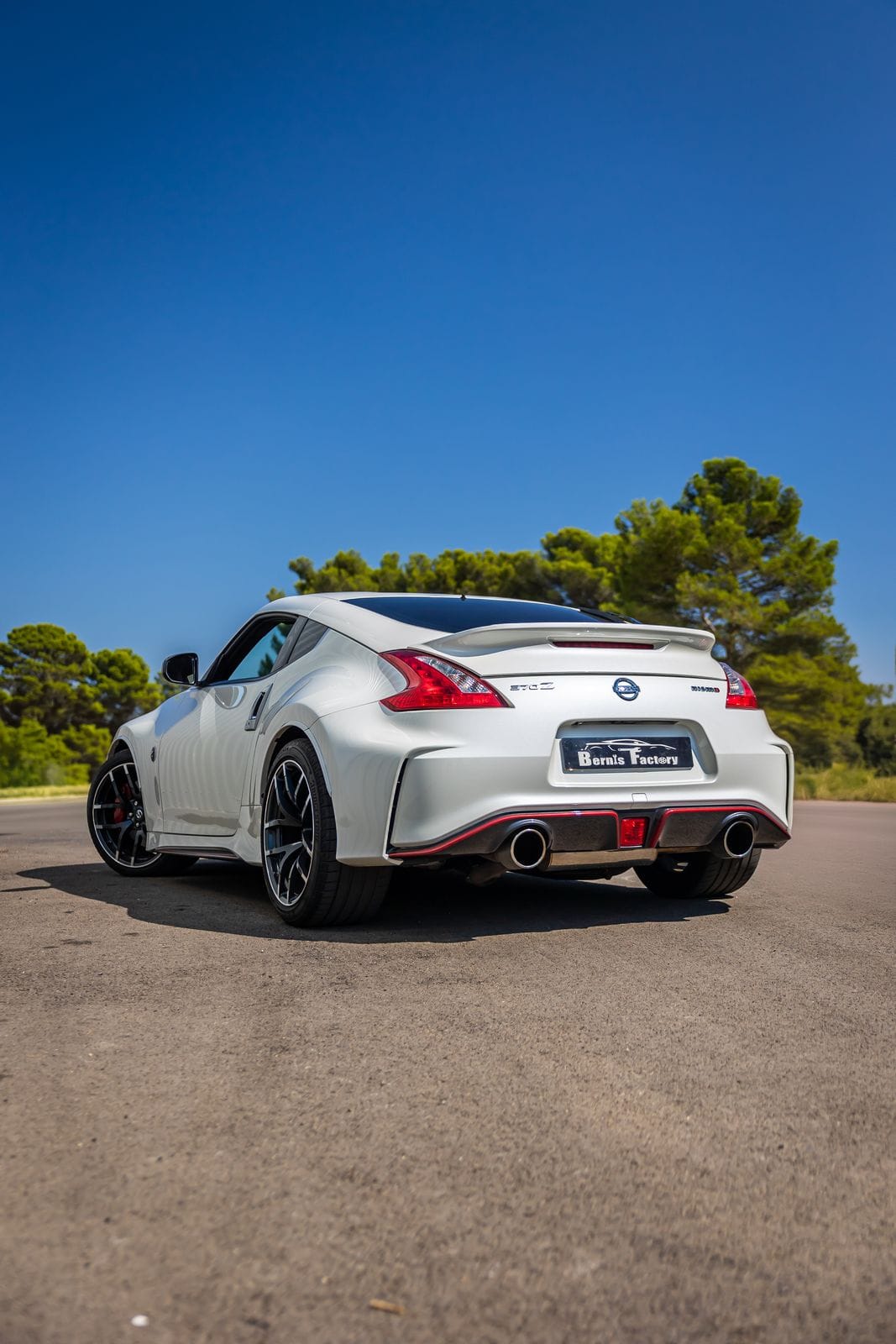
Stiffer rear: towards oversteer and rotation
The car rotates more easily but traction can suffer.
Why stiffening everything is not a strategy
The front/rear ratio matters, not absolute stiffness.
The question is which axle should work harder.
Stock, uprated or adjustable bar: the differences
The bar, its links and its mounts define its real effect.
Solid or hollow, diameter, adjustable holes
Diameter strongly drives stiffness; holes change lever length.
Adjustable drop links and preload
Set links at ride height so the bar is neutral.
Rubber or polyurethane
Polyurethane is more precise but transmits more vibration.
A healthy stock bar with preload-free links already does a lot.
Anti-roll bars and coilovers: a pair to set up together
Springs, dampers and bars act on the same body movements.
Changing one without the others often moves the problem.
Springs, damping, alignment: the logical setup order
- 01
- Height & springsSet the base first.
- 02
- AlignmentThen camber, toe and caster.
- 03
- BarsThen front/rear balance.
- 04
- DampingFinally rebound and compression.
See our article coilovers: how they work and how to set them up.
Road or track: which setup for which use?

There is no universal setup; everything starts from real use.
Spirited road: comfort and predictability
Mild understeer and controlled roll.
Track: rotation and traction
Stable in fast corners like Signes, agile in hairpins.
Powerful RWD and AWD cars
Traction and torque split shape the setup, case by case.
See our circuit preparation, track day preparation and BMW M preparation, plus our articles track day at Le Castellet and GT-R R35 guide.
- 01
Clunks over bumps
Usually a worn drop link joint.
- 02
Excessive roll
Crushed bushings reduce effective stiffness.
- 03
Asymmetric behaviour
Broken link, preload or alignment issue.
A full running gear check comes first.
Signs of a worn bar or drop links
Links and bushings wear, rarely the bar itself.
How the workshop sets the balance: method and testing

Balance is set through driver feedback and measurement.
- 01
- ListenWhere does the car bother you?
- 02
- InspectRestore worn parts first.
- 03
- BaselineHeights, corner weights, links, alignment.
- 04
- TestOne change at a time, road then track, 700 m from Paul Ricard.
The goal is a coherent car, not the stiffest one.
See our adjustable suspension service.
Frequently asked questions
Does a stiffer anti-roll bar always improve handling?
No, it also shifts balance and can reduce tolerance and traction.
Can I change the bar without touching the dampers?
Yes, if the dampers are healthy.
Is an uprated bar roadworthiness-test compatible?
Generally yes if parts are in good condition; inform your insurer.
Is alignment needed after changing a bar?
Not in principle, but it is part of any balance setup.
Should both bars be changed?
Not necessarily; one bar is often enough to correct a tendency.
What about the rain?
Less grip needs less roll stiffness; a softer setting often helps.
An anti-roll bar is tuned, not endured
The bar is a fine balance lever, set with springs, dampers and alignment.
We can analyse and set your car's balance at our Signes workshop next to Circuit Paul Ricard.
Have your car's balance analysed
Call, text or message us on WhatsApp.
Chassis, suspension and track
Discover our chassis preparation, plus related services and articles.
A project,
a call.
Tell us about your car and how you use it. We'll figure out the right service together, maintenance, engine tuning, chassis, restoration.
83870 Signes
Across from the Paul Ricard circuit
Monday, Friday · 9:30-18:00
By appointment only